Events
A Practical Product Launch Checklist for Phuket
Build the launch around what guests should understand, experience and do next.
By Royal Phuket City Hotel Team
A successful product launch in Phuket needs a clear reveal, a dependable demonstration and a guest journey that supports the business goal. Start with what the audience should understand or do afterwards, then plan the room, production, rehearsals and follow-up around that outcome. An impressive stage cannot compensate for a product demonstration people cannot see or hear.
This checklist is for organisers preparing a launch at a venue such as Royal Phuket City Hotel. It focuses on operational decisions to confirm with the venue and suppliers, rather than assuming that every technical service is included in room hire.
Define the one message people should remember
Write the launch's main message in one sentence. It should explain the product's relevance to the audience, not simply announce that it exists. A distributor briefing, media introduction and customer demonstration may need different programmes even when they concern the same product.
Decide the next action you want guests to take. They might request a demonstration, arrange a sales conversation or understand a new feature. That choice affects where you place staff, how long guests spend with the product and what information they leave with.
Keep internal success measures realistic. Attendance, qualified follow-up requests and completed demonstrations are different measures. Agree which matters before the event so the programme does not become a collection of unrelated activities.
Map the guest journey before designing the stage
Describe the sequence from arrival to departure: registration, waiting, presentation, reveal, hands-on time and any meal or networking. Ask where each part happens and whether activities run at the same time.
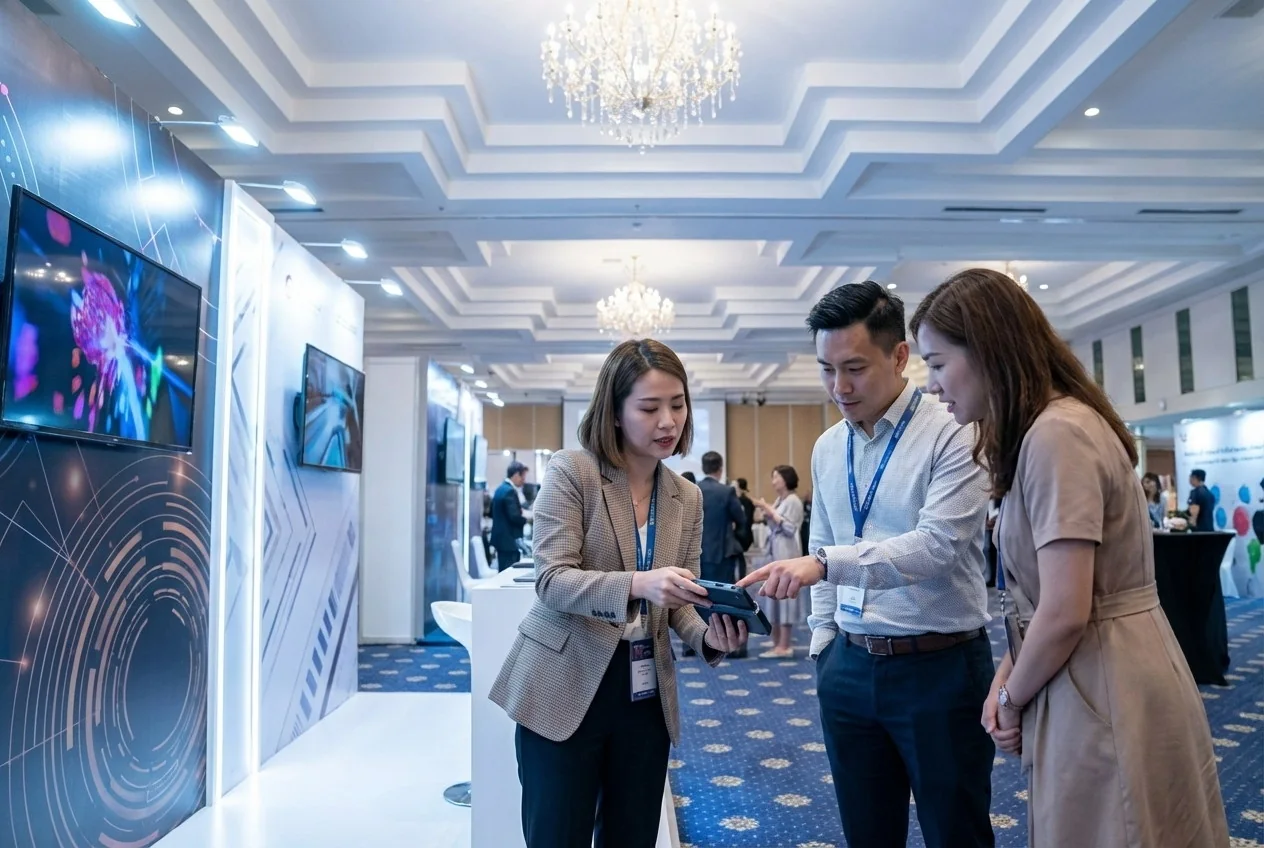
A busy demonstration station needs enough circulation space for guests who are watching, participating and moving on. Decide how questions are handled and whether some visitors need booked appointments. Otherwise, the most interested guests may spend the session queueing rather than engaging.
Tell the venue about media interviews, private briefings and any restricted areas. These requirements can affect the proposed room and adjacent spaces. Use a simple floor plan to show what guests, staff and equipment need to do.
Check that the product can reach and use the space
Give the venue accurate product dimensions, weight, packaging and handling requirements. Include delivery vehicles, loading equipment and the people responsible for installation. A small item carried in a case and a large display need very different preparation.
Ask the venue to confirm access routes, delivery windows and any limitations. Do not infer suitability from the size of a ballroom photograph. Large or specialist items require specific operational approval before transport is committed.
Explain power, connection, ventilation or other operating needs to the technical team. If the demonstration uses consumables, liquids or equipment with special requirements, have the relevant suppliers and venue assess the plan. Keep the written approval with the event documents.
Design the demonstration for the least favourable seat
Stand where the guest furthest from the product would sit and ask what they can understand. Small movements, fine detail and a screen on a handheld device may need a camera feed or a separate hands-on area. Confirm the solution with the production team.
Check presentation connections, audio and the transitions between speakers. If a live internet connection matters, describe the expected use and ask how it will be tested. A general statement about Wi-Fi does not confirm the performance needed for a specific demonstration.
- Can every guest see the important product detail?
- Can they hear both the presenter and audience questions?
- Who changes slides, video, sound and lighting cues?
- Is there a fallback if the live demonstration cannot run?
- Have all presentation files been tested on the actual setup?
Rehearse the reveal and the recovery plan
A technical rehearsal should test the sequence, not just whether the screen turns on. Walk through entrances, microphone handovers, the reveal cue and the move into demonstration time. Use the people who will operate those elements during the event where possible.
Prepare a concise cue sheet with one person responsible for calling the sequence. Name who can approve a change if something runs late. Multiple people giving conflicting instructions can create more disruption than the original delay.
Build a useful fallback. That might be an approved recorded demonstration, a second device or a different explanation of the product. Keep claims consistent across all versions so an improvised alternative does not promise something the product cannot deliver.
Plan staff, hospitality and conversations together
Brief the guest-facing team on the audience, key message and escalation route for questions. They should know who can answer technical queries and who handles commercial follow-up. Do not leave those responsibilities to whoever happens to be nearest.
Choose refreshment service that fits the programme and product interaction. A guest handling a sample may not have a free hand for a plate and glass. Discuss where food is served and how the team keeps demonstration areas clear.
For a longer programme, consider whether a separate meal or networking setting helps. TWIST and Yan Long are dining options to discuss with the hotel team, subject to the arrangements and availability confirmed for your group.
Make follow-up easy and respectful
Tell interested guests how to request further information. If you collect contact details, explain the purpose and follow the consent and privacy process appropriate to your organisation. An event registration list should not automatically become an unrestricted marketing list.
Prepare approved product information and a clear contact route. Separate general questions from requests requiring technical or sales input. After the launch, check that the people who asked for a conversation receive a relevant response rather than a generic broadcast.
Also plan the operational close: product packing, supplier collection, waste and the agreed handback of the space. The event is not finished when the final guest leaves.
Product launch planning questions
Should we confirm equipment from the venue website?
Use the website to start the conversation, then obtain an itemised technical proposal for your exact demonstration. Confirm staffing, testing and any supplier equipment.
What should go into the first enquiry?
Include audience size, event purpose, product handling needs, programme, technical requirements and rehearsal access. Our venue brief guide provides a useful structure.
Explore product launches at Royal Phuket City Hotel, then contact the events team with your demonstration brief and guest journey.